
The 228 Incident (
Taiwan's Wound That Has Not Healed

Her name was Lin Jiang-mai. She was a widow. She sold contraband cigarettes from a street stall in Taipei to feed herself and her children.
On the evening of February 27, 1947, agents from the Taiwan Monopoly Bureau came down the street. They were enforcing the KMT government’s monopoly on tobacco. They confiscated her cigarettes and her cash. Everything she had. She begged. She grabbed at one of the agents. He struck her with his pistol. She collapsed, bleeding, in front of the other street vendors.
A crowd gathered. The agents tried to walk away. The crowd followed, angry and loud. One of the agents panicked and fired into the crowd. A bystander was killed.
The next morning, February 28, 1947, protestors marched on the Monopoly Bureau offices. The guards fired into the crowd again. More people died.
The number 228 (er-er-ba in Mandarin, for February 28) became the name of what followed. Not just a riot. Not just a protest. An island-wide uprising, and then a massacre. And then, for forty years, a silence imposed by martial law, so that the people of Taiwan were forbidden even to speak of it.
This is the story of how Taiwan’s relationship with the mainland broke before it even had a chance to begin.
The Island Japan Built
To understand 228, you should understand what Taiwan had become after fifty years of Japanese rule.
Japan took Taiwan in 1895 as a prize of the First Sino-Japanese War. The Qing had lost. The Treaty of Shimonoseki transferred the island and the Penghu archipelago to Japan. There was local armed resistance from day one, but Japan stamped it out with considerable violence and then settled in for the long term.
What Japan built over the following five decades was, by the standards of Asian colonialism, a functioning modern infrastructure. They surveyed every parcel of land. They doubled the assessed acreage paying tax. They eradicated cholera. They built roads wide enough for motor vehicles, laid railway track, developed ports. By 1939, industry had overtaken agriculture as the primary driver of the Taiwan economy. Taiwan was the second highest-ranking territory in Asia for primary school enrollment, behind only Japan itself. The colonial government ran a detailed census. They knew exactly who was on the island and where.
But this was colonialism, and the hierarchy was unambiguous. Japanese at the top. Ethnic Han Chinese, predominantly Hokkien-speaking people whose families had come from Fujian province over the previous two or three centuries, plus a smaller Hakka population from Guangdong, were in the middle. The indigenous mountain peoples at the bottom. Taiwanese were clerks in the bureaucracy, not officials. They attended primary school, but advanced education was deliberately limited. The Japanese didn’t want ethnic Chinese to become too educated.
As the war years intensified, Japan pushed harder. Japanese became the language of instruction. Chinese-language newspapers shut down. A name-change campaign encouraged families to adopt Japanese names. Over 200,000 residents of Taiwan served Japan’s military, mostly in labour roles (porters, transport workers) but increasingly in military ones as the war turned against Japan. Some Taiwanese fought in the Pacific. Some died in places they’d never heard of before the war.
By the end of the war, somewhere between 15,000 and 30,000 Taiwanese had been killed by American bombing raids targeting Japan’s military-industrial installations on the island.
When Japan surrendered in August 1945, the people of Taiwan had lived under Japanese rule for fifty years. Many spoke Japanese better than Mandarin. Many had been educated entirely in Japanese schools. Their professions, their legal system, their infrastructure, their daily habits of governance had been shaped by a colonial power that was now being expelled.
In late October 1945, the Republic of China government officially took possession of Taiwan. The Cairo Declaration of 1943, signed by Roosevelt, Churchill, and Chiang Kai-shek, had agreed that Taiwan would be returned to Chinese sovereignty after Japan’s defeat. The Japanese were ordered to leave. Some 300,000 of them, including many who had been born on the island, left. They went largely without incident. The new Chinese administrators arrived.
What happened next set everything that followed.
Chen Yi and the Carpetbaggers
Chiang Kai-shek appointed Chen Yi as Governor-General of Taiwan. Chen Yi was a military man, a loyal KMT official. He arrived with a mainland Chinese administrative class (bureaucrats, soldiers, police) who had no particular knowledge of Taiwan, no Japanese-language skills, and little interest in the people they now governed.
The Taiwanese called these newcomers Waishengren: people from outside the province. The Taiwanese themselves were Benshengren: people of this province. The distinction became the fault line around which everything would crack.
The new administration quickly alienated the people it was supposed to govern. Chen Yi’s government moved to take over the profitable Japanese-built industries and infrastructure, turning them into state monopolies controlled by mainlanders. The Tobacco and Wine Monopoly Bureau, the Trading Bureau, the Petroleum Bureau were all captured by the incoming administration and run for its benefit, not for Taiwan’s citizens.
We’ve talked about carpetbagging already, in the Reckoning episode, when we looked at the KMT’s behaviour in Shanghai after Japan’s surrender. The pattern was the same here, but concentrated. Taiwan was a relatively intact, functioning economy. It had been industrialized. Its infrastructure was in reasonable shape. The mainland Chinese arriving from a war-devastated China must have looked at it and seen wealth to be seized. And seize they did.
Mainland soldiers were underpaid, often unpaid, and undisciplined. They looted. They demanded bribes. An economy that had functioned, however oppressively under Japanese rule began to come apart. Inflation arrived. Goods disappeared. The same hyperinflationary spiral destroying the mainland began infecting Taiwan.
The Taiwanese watched all of this with a growing bitterness that had a specific shape. They had not loved Japanese rule. But the Japanese, for all their racism and their violence, had run things. Trains ran. Courts functioned, after a fashion. The monopolies were predatory, but they were at least predictable. What replaced Japanese rule felt to many Taiwanese like not liberation but a different, more chaotic occupation.
There was also the matter of language. The new government announced that Mandarin was now the official language of Taiwan. Japanese was banned. But Mandarin was not the language most Taiwanese spoke at home. They spoke Hokkien or Hakka. Mandarin was the language of the mainland administrators. The imposition felt like another colonial substitution. Japanese was replaced by a different outsider’s tongue.
Jobs in the new government went overwhelmingly to mainlanders. Taiwanese with university degrees from Japanese institutions, some of them highly educated, found themselves excluded from positions they were qualified to hold. The doctors, lawyers, teachers, and business leaders of Taiwan’s pre-1945 elite were being pushed aside by newcomers who knew nothing of the island.
By early 1947, Taiwan was a pressure vessel. The fuel was economic misery, corruption, and ethnic resentment. All it needed was a spark.
The Uprising: February 28 to Early March
Lin Jiang-mai’s beating on the evening of February 27 was the spark.
The protest at the Monopoly Bureau the following morning, the February 28, turned violent when guards fired into the crowd. Word spread across Taipei by that afternoon. The radio stations, still broadcasting in Japanese, which mainlander officials couldn’t easily monitor, became the communication network. Crowds gathered. Violence broke out. Taiwanese attacked mainlanders on the streets. There were killings on both sides, but the fury was primarily Taiwanese directed at mainland Chinese officials, soldiers, and police.
Within days, the uprising had spread across the entire island. It was not a Communist insurgency. It was not organized by any party or movement. It was a spontaneous explosion of accumulated rage. In city after city, Taiwanese took control of local government buildings, police stations, utilities. In some places, the transition was remarkably orderly. Local Taiwanese leaders stepped in to maintain services and prevent looting. In others, there was serious violence.
A group of Taiwanese civic leaders formed what they called the 228 Incident Settlement Committee. Their goal was to negotiate with Chen Yi’s government. They drew up a list of demands. Many of them were moderate: local autonomy, equal treatment, reform of the monopoly system. There were also more radical voices calling for full independence, or for a UN trusteeship. The committee represented the ambitions of Taiwan’s educated elite: the doctors, the lawyers, the journalists, the teachers.
Chen Yi appeared to negotiate. He met with committee members. He made concessions on paper. He broadcast reassurances on the radio. He asked for time.
What Chen Yi was doing was buying time for Chiang Kai-shek to send troops from the mainland.
The Massacre: March 1947
The 21st Division of the Nationalist Army arrived in Keelung on March 8, 1947. Soldiers began landing before dawn. By midday, they were moving through Keelung shooting people in the streets.
What followed was not a military campaign against an armed insurgency. It was a systematic suppression. KMT troops moved through towns and cities killing. Loudspeakers ordered everyone indoors. Those found in the streets were shot. Soldiers entered homes. Men of fighting age, sometimes defined loosely enough to include anyone who appeared educated or prominent, were taken away. Many were shot at the waterfront, their bodies thrown into harbours.
The Settlement Committee members were arrested. Most were executed. The educated elite of Taiwan - the doctors, the lawyers, the teachers, the journalists, the civic leaders who had tried to negotiate peacefully - were killed first. This was not an accident. It was policy. The Nationalist forces were eliminating precisely the people with the capacity to organize resistance or to articulate Taiwanese grievances to the outside world.
The death toll from the uprising and the subsequent suppression is disputed and will probably never be precisely known. Estimates range from ten thousand to thirty thousand dead. The most careful scholarship suggests somewhere between eighteen thousand and twenty-eight thousand. That was in a population of roughly six million. It was not a riot that got out of hand. It was a deliberate massacre of Taiwan’s potential leadership class.
Chiang Kai-shek later removed Chen Yi from his position, officially because of his failures of governance that had contributed to the uprising. But Chiang did not disavow the suppression itself. Chen Yi was eventually executed in 1950, but for conspiring with the Communists, not for the massacre.
The Generation That Was Lost
Think about what was lost in those weeks.
Taiwan in 1947 had a small but real educated class. These were people who had navigated the Japanese colonial system and come out qualified: physicians trained in Japanese medical schools, lawyers who had passed rigorous bar examinations, journalists who had published newspapers and magazines, teachers, local politicians, businessmen who had built companies despite the racial hierarchy of colonial rule. They were, by any measure, Taiwan’s future leadership.
The Settlement Committee, the very people trying to negotiate a peaceful resolution, were among the first arrested and killed. The Nationalist forces targeted anyone with education, professional standing, or public recognition. Taiwan’s potential governing class was eliminated in a matter of weeks.
Those who survived, those who managed to hide, to flee to the mountains, to get out of the country before the net closed, carried the wound into the decades that followed. Many Taiwanese still refer to this massacre today. It lives on in the minds of many.
The White Terror in Taiwan
When Chiang Kai-shek’s government lost the civil war on the mainland and retreated to Taiwan in 1949, roughly 1.2 million mainland Chinese came with it: soldiers, officials, their families. The Waishengren population surged. The KMT declared martial law. That martial law remained in effect from 1949 until 1987. That has been described as the longest period of martial law in any territory in the twentieth century. (Syria managed to beat it, but with a period that spanned the twentieth and twenty-first centuries.)
Under martial law, the events of February and March 1947 became unspeakable. Not just in the sense that people were afraid to talk about them, though they were, but literally: the 228 Incident was not taught in schools, not mentioned in the press, not permitted in public discourse. Survivors of the massacre hid what they had seen and who they had lost. The wound was real, but its name could not be spoken.
The White Terror in Taiwan, the KMT’s suppression of political dissent in the years after 1947 and especially after 1949, killed or imprisoned thousands more. Anyone suspected of Communist sympathies, of Taiwanese independence sentiment, of opposition to KMT rule could be arrested, tried by military tribunal, imprisoned for years or decades, or shot. Estimates of those killed or imprisoned during the White Terror run to tens of thousands. Many were Benshengren Taiwanese. Many were also mainlanders who had the wrong political opinions.
The silence lasted a generation. It lasted, in its official form, until 1987, when martial law finally ended. It lasted, in the public reckoning, until 1991, when President Lee Teng-hui, himself a Benshengren Taiwanese, the first Taiwanese-born president of the Republic of China, authorized a formal government investigation into 228. The report was released in 1992. It named the victims, acknowledged the death toll, and assigned responsibility to the Nationalist government.
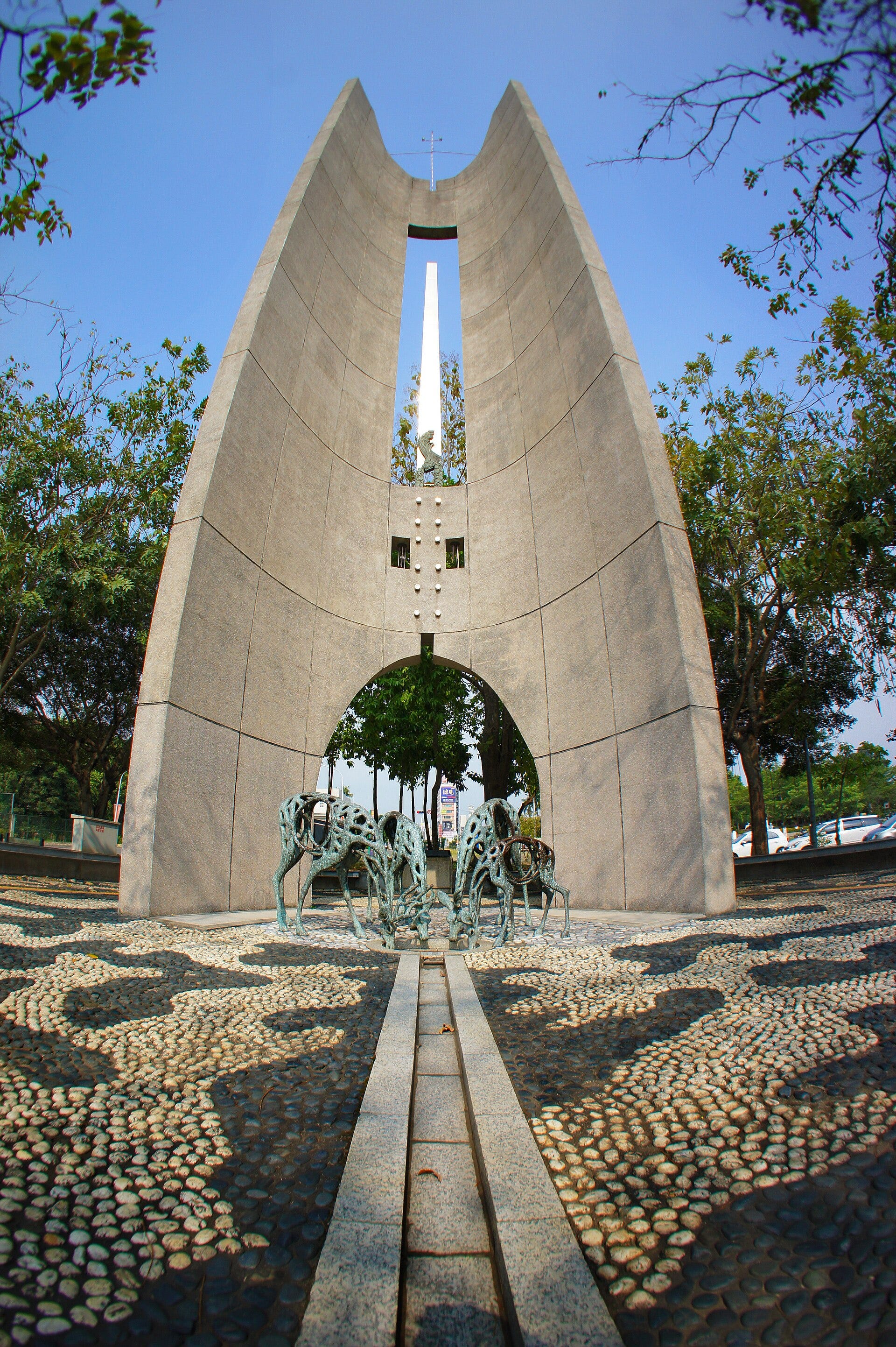
In 1995, President Lee formally apologized on behalf of the government. February 28 became a national holiday of remembrance. A 228 Memorial Museum opened in Taipei. Monuments were built.
Why 228 Matters to the Chinese Revolution
228 sits at a peculiar angle to the main story. The Chinese Revolution, as we’ve followed it recently, is primarily the story of the contest between the KMT and the CCP for control of the mainland. Taiwan’s story in this period is a branch from that trunk.
But 228 is not peripheral. It connects to the main story in at least three direct ways.
First, it is the clearest single demonstration of what KMT governance looked like when it had a free hand. On the mainland, the KMT’s failures, corruption, inflation, military atrocities, political suppression, were contested terrain, with the Communists presenting an alternative. In Taiwan in 1947, there was no competing authority. What the KMT did in Taiwan, it did without constraint. The 228 massacre is the KMT’s record in miniature.
Second, it damaged the possibility that mainland Chinese rule might be welcomed in Taiwan. The people of Taiwan had waited for liberation from Japanese colonialism. What arrived felt like a different colonialism. The Benshengren Taiwanese who survived 1947 and then lived through the White Terror would carry a specific understanding of mainlander rule for the rest of their lives. That understanding shapes Taiwanese politics to this day.
Third, 228 matters because of what Taiwan became after 1949. When Chiang’s government retreated to the island, Taiwan became the sanctuary of the Republic of China, the legal successor to the government that had fought the Japanese and that the West continued to recognize as the legitimate government of China for decades. The legitimacy of that government rested partly on its claim to represent the Chinese people. But in Taiwan, that government had massacred part of the local population within two years of its arrival. The contradiction was never fully resolved, and it echoes in the cross-strait relationship today.
The Wound That Shaped the Future
I want to close with something that is easy to miss if you read 228 purely as a political event.
Lin Jiang-mai, the widow selling cigarettes on that February evening, was not a political actor. She was not a nationalist or a Communist or a member of the Settlement Committee. She was trying to survive. What happened to her, the confiscation, the beating, the blood on the pavement, was the meeting point between a woman’s ordinary life and a government that saw her as a subject, not a citizen.
Thousands of the people killed in the weeks that followed were also not political actors in any meaningful sense. They were the people who run a society day by day, the people without whom no government can actually govern.
The KMT killed many of them. And then imposed a silence that lasted forty years, so that their children grew up not knowing what had happened to their parents or their grandparents, or why.
When that silence finally broke in the late 1980s and 1990s, when Taiwan was transitioning from authoritarian rule to genuine democracy, 228 did not stay buried. It surged back. It became the central event around which Taiwanese identity was organized: not Chinese identity, not Japanese identity, but something specific to the island and its experience. The Taiwanese identity draws its moral energy in significant part from the memory of 228.
Today, when Beijing insists that Taiwan is an inalienable part of China and that unification is inevitable, the people of Taiwan who answer “we don’t want that” are not doing so in an historical vacuum. They are doing so with the memory of 1947 somewhere in the background. They might have a memory that says: we know what mainland Chinese rule looks like when it arrives. We have seen it before.
The 228 Incident did not cause the Chinese Civil War, and it did not determine its outcome. But it shaped the island that became the refuge of one of the war’s losers, and it shaped the people who were already living there when that refuge was claimed. The wound, when it was finally allowed to be named, turned out to have been a deep one.
Next time, we return to the mainland, where the civil war that had been paused, negotiated, and finally resumed was now entering its decisive phase.
Thanks for reading about the Chinese Revolution.
Image: "File:228 Memorial Park, Monument, Chiayi City (Taiwan).jpg" by Mk2010 is licensed under CC BY-SA 4.0.